
Types of Hearing Loss
Hearing loss is generally categorized into three main types, defined by which part of the auditory system is damaged. There is also a distinct disorder related to how the brain processes sound.
01
Sensorineural Hearing Loss
02
Conductive Hearing Loss
03
Mixed Hearing Loss
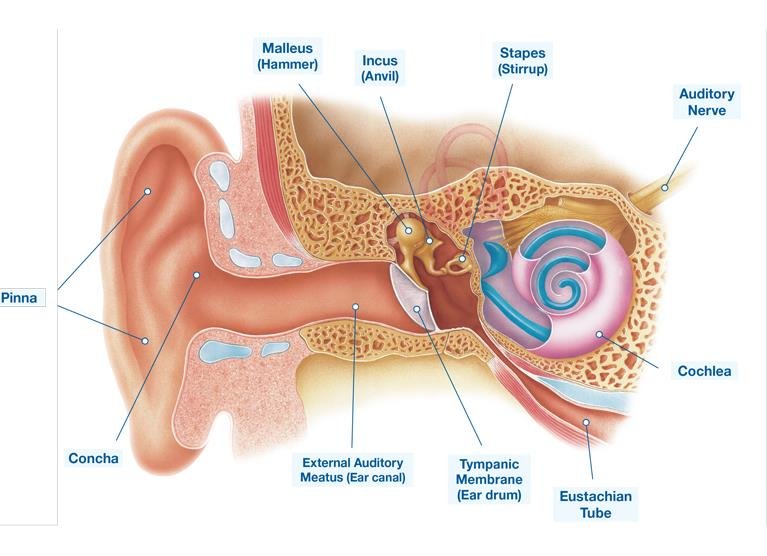
Here is a breakdown of the types, their causes, and typical treatments.
1. Sensorineural Hearing Loss (SNHL)
This is the most common type of permanent hearing loss. It occurs when there is damage to the tiny hair cells in the inner ear (cochlea) or to the auditory nerve that carries signals to the brain.
What it feels like: Sounds are usually fainter and harder to understand. Speech often sounds “muffled,” and it is difficult to separate speech from background noise.
Common Causes:
- Aging (Presbycusis): Natural deterioration over time.
- Noise Exposure: Prolonged exposure to loud sounds (machinery, music) or single impulse noises (explosions).
- Illness/Genetics: Viral infections (like meningitis), autoimmune disorders, or family history.
- Ototoxicity: Damage from certain strong medications (e.g., some chemotherapy drugs or antibiotics).
Treatment: It is rarely medically curable. Management usually involves hearing aids or cochlear implants (for severe cases).
2. Conductive Hearing Loss
This type occurs when sound waves are blocked from passing through the outer or middle ear into the inner ear. It is often a “mechanical” problem.
What it feels like: Sound volume is turned down, but clarity remains relatively intact if the volume is high enough. You might feel your own voice sounds louder than usual.
Common Causes:
- Blockages: Earwax impaction or foreign objects.
- Infection: Fluid buildup in the middle ear (otitis media) or "swimmer's ear" (otitis externa).
- Abnormalities: Perforated eardrum, or abnormalities in the middle ear bones (otosclerosis).
Treatment: This is often temporary or curable. Treatments include medical intervention (antibiotics, wax removal) or surgery to repair the ear structure.
3. Mixed Hearing Loss
As the name implies, this is a combination of both Sensorineural and Conductive hearing loss occurring in the same ear.
Example: A person with age-related hearing loss (sensorineural) who also has a temporary ear infection (conductive).
Treatment: Physicians usually treat the conductive component first (e.g., clearing the infection) before managing the remaining sensorineural loss with hearing aids.